A conversation with Georgia voters about the 2022 Midterm Election
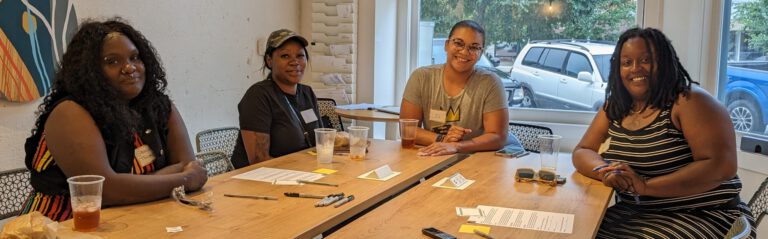
In recent months, we’ve spoken to voters at events, held focus groups across the state, and sat down with community members one-on-one to ask them about their experience in the last statewide election. In total we collected 359 surveys from individual registered voters and spoke directly to 33 people across 8 focus groups.
We found that the election had everyone’s attention—even those who didn’t participate—with 20% of non-voters still “closely” following the election. Traditional voter outreach still dominates, especially direct mail, which was the most remembered form of voter contact, reaching 76% of voters and 47% of non-voters. Voters we talked to disliked the overwhelming volume of information, much of it negative in tone, especially in the final months of the campaign season. Instead, voters were more interested in nonpartisan and local topics like “after-school programs for kids” and “fixing the roads.” Similarly, we found alignment with year-round organizing goals as many respondents requested in-person events, voter education, and opportunities to build community with neighbors over the long-term.
Click here to download the full report, including a list of recommendations, or scroll down to see sample quotes and findings from some of our conversations.
Key Findings
INVEST IN LOCAL CIVIC EDUCATION
I am most motivated by local [elections], but least educated about local [elections]. [I] need to research more.
ORGANIZE FOR THE KIDS
Help the kids come out! I think they should have a fair [like the one] in Sasser[.] Why not have a fair down here in Dawson? They [have] some big old buildings somewhere — they can put the equipment and stuff [there] and let the kids enjoy themselves.
AVOID NEGATIVE AND OVERWHELMING INFO
I didn’t vote because there was too much bickering and fighting between candidates. Everyone was more interested in focusing on digging up dirt on each other, rather than what they planned to do for our country. I was left confused, so I made up my mind not to vote.
TALK ABOUT NONPARTISAN ISSUES
Like the roads and things…it [is] especially bad on our sides of town. You know what I’m saying? And a lot of people don’t even know that [it takes] a toll, you know. That’s extra money [for] just the little things…messing up the front-end alignment, messing up the axles and tires.
FOCUS ON YEAR-ROUND ORGANIZING
It’s sad that other people from out of town have to come here to get together with us. And ya’ll come back! I don’t know when, make it soon. And see us AM or PM. [“Yeah!”]
Listen to an audio clip from one of our focus groups.
Findings: Non-Voters
BUILD TRUST IN THE VOTING PROCESS
“I feel like it’s a hoax, because like the last one it was more like the electors, they go based on the electors for each state. Who [are they]? How do you guys sit there in that timeframe and know all of the votes at one time?”
INVEST IN COLLECTIVE ACTION
26 of 29 interviewees agreed that framing voting as “an act of community” instead of “an individual action” would strengthen people’s perception of and willingness to vote.
SHOW THE IMPACT OF THE VOTE
Top reason non-voters would be more likely to vote in the future? Seeing my vote make a difference in the community. This far out-paced other, more candidate-specific options.
PAY ATTENTION TO VOTING BARRIERS
- Distance to polls
- Administrative burdens
- Personal health crises
- Child care responsibilities
- Obligations to work / financial stability
- Criminal justice impacts
Findings: Voters
TALK ABOUT BRINGING CHANGE
1 out of every 2 voters mentioned voting being a pathway for making change.
CONSIDER FEELINGS TOWARD LEGACY
Voters consider their legacy – past, present, and future. Nearly half of voters referenced voting as a tradition, duty, obligation, or responsibility.
PARTNER WITH FAITH INSTITUTIONS
Among those who mentioned at least one partner, 48% mentioned a church or other faith institution.